
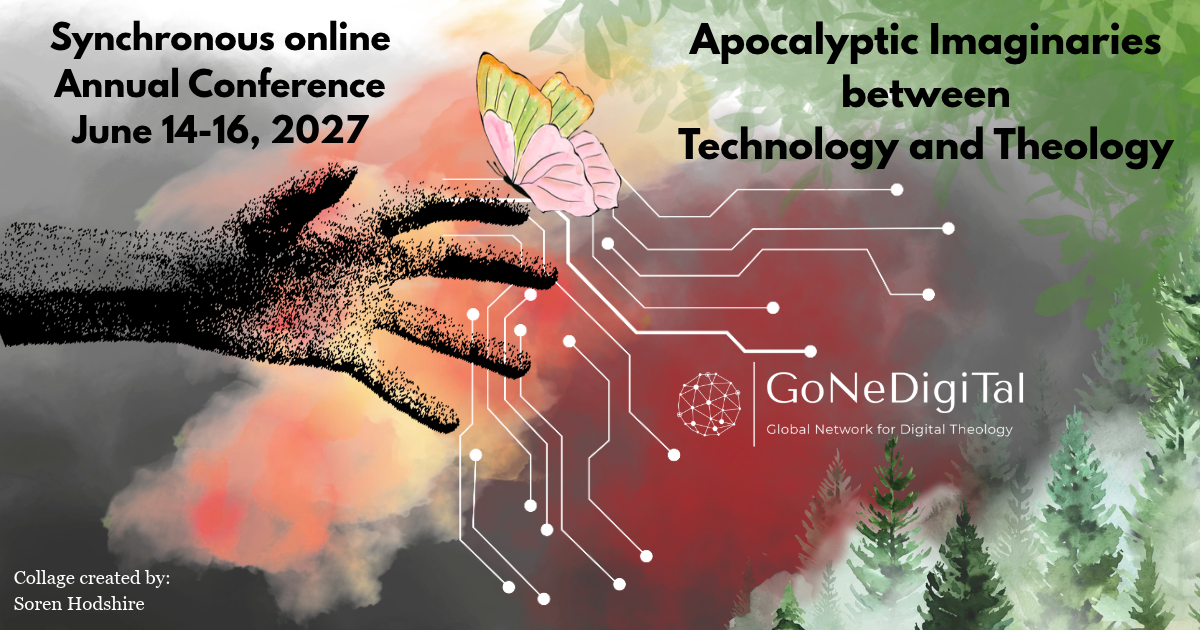
What happens when technological futures begin to look apocalyptic—and apocalyptic visions begin to look technological?
Apocalyptic imagination has never been confined to religious traditions. It has shaped cultural responses to crisis, catastrophe, technological transformation, extinction, salvation, and the possibility of radically new worlds. In the contemporary moment, theological and technological imaginaries increasingly converge around questions of endings and beginnings: the end of humanity, ecological and planetary catastrophe, artificial intelligence, technological singularity, new forms of life, and the promise—or threat—of a radically transformed future.
This interdisciplinary conference explores apocalyptic imaginaries at the intersection of technology and theology.
We invite scholars to investigate how concepts such as end times, judgement, salvation, redemption, hope, despair, and new creation operate across theological and technological discourses.
We welcome contributions addressing, among others:
● Apocalyptic imaginaries in theology and religious thought
● Apocalyptic visions in technology and digital culture
● The end of the world between technology and theology
● New creation and technological transformation
● Salvation and redemption in technological imaginaries
● Ethics, judgement, and responsibility in apocalyptic times
● Hope, despair, and competing visions of the future, including eschatologies
● Counter-apocalyptic imaginaries
● The task of religion in seemingly apocalyptic times
We invite contributions from theology, religious studies, philosophy, science and technology studies, media and cultural studies, and related fields. We particularly encourage theoretically ambitious and genuinely interdisciplinary approaches that place technological and theological imaginaries into critical dialogue.
AI and Academic Integrity
Each proposal and presentation, if accepted, must be accompanied by an AI academic integrity statement that identifies the AI platforms or tools used in research, the scope of that use, and human authorial accountability for the accuracy and originality of your work.
Conference co-sponsor: Stead Center for Ethics and Values, www.steadcenter.com.